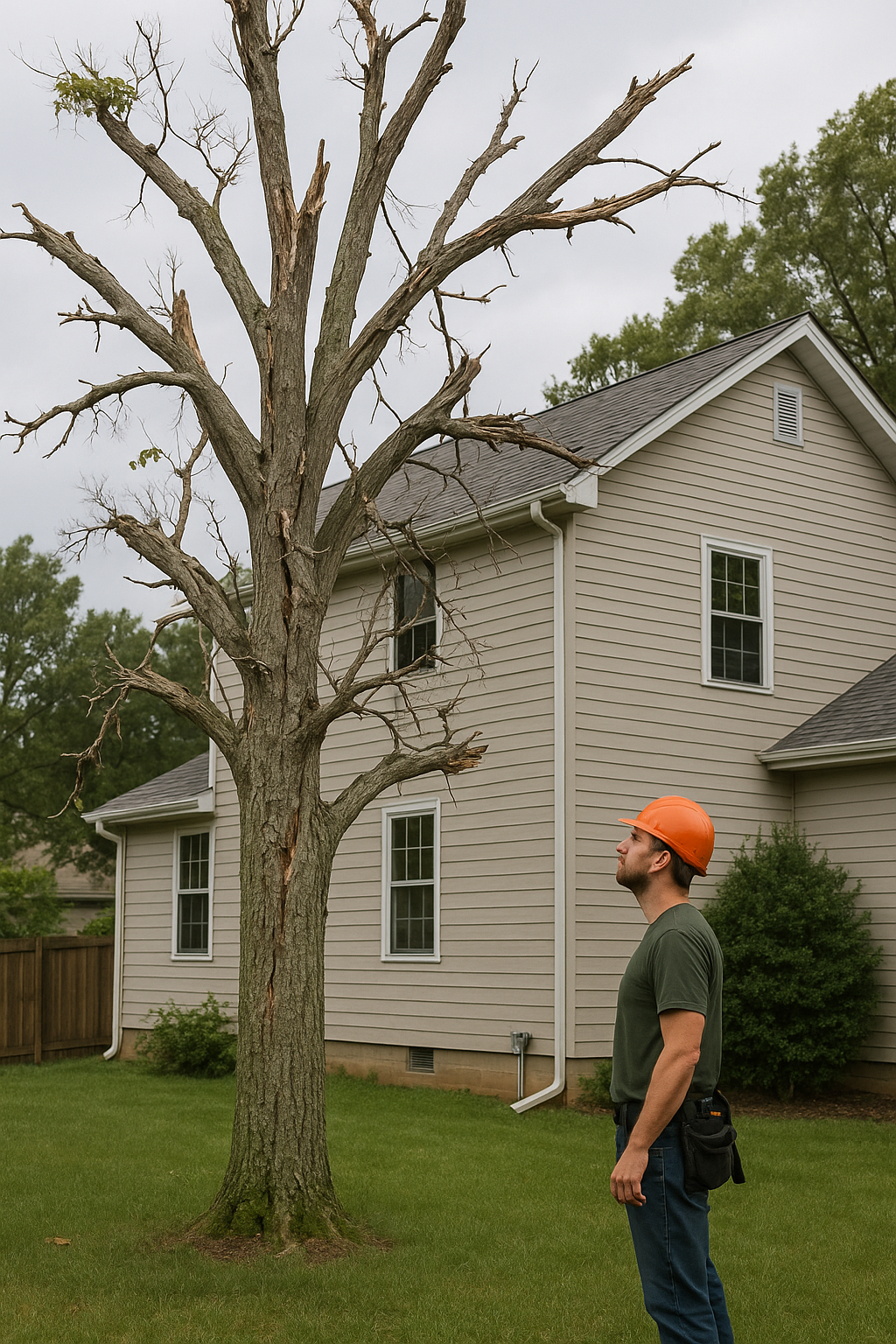
Tree work is one of the most dangerous jobs in the country. The Bureau of Labor Statistics consistently ranks tree trimming and logging among the top ten most hazardous occupations in the U.S. — above construction, above roofing, above most of the trades most people think of as dangerous.
Which means when you hire someone to remove a tree or trim branches near your home in Richmond, you're not just hiring a service. You're deciding who's going to operate chainsaws and heavy equipment on your property, often at height, often near your house, your car, or your family.
Getting this decision wrong doesn't just cost you money. It can cost you your roof, your fence — or worse.
Here's how Richmond homeowners should actually evaluate tree service companies.
1. Verify Virginia Contractor Licensing — and Understand What It Covers
Virginia does not require a specific tree service license, but any company performing work over $1,000 must hold a
Virginia Class A or Class B Contractor License issued by the Department of Professional and Occupational Regulation (DPOR).
You can verify any Virginia contractor's license at
dpor.virginia.gov in under a minute. Check that the license is:
- Active (not expired or suspended)
- Appropriately classified for tree and landscaping work
- Held by the company you're hiring — not a different entity
Some unlicensed operators get around this by keeping job estimates just under $1,000, then adding on once work begins. Get everything in writing before any work starts, and verify licensing before you sign anything.
2. Insurance Is Non-Negotiable — Get the Certificate Before Anyone Sets Foot on Your Property
This is the most important box to check, and the one most Richmond homeowners skip.
Tree work carries two major insurance risks:
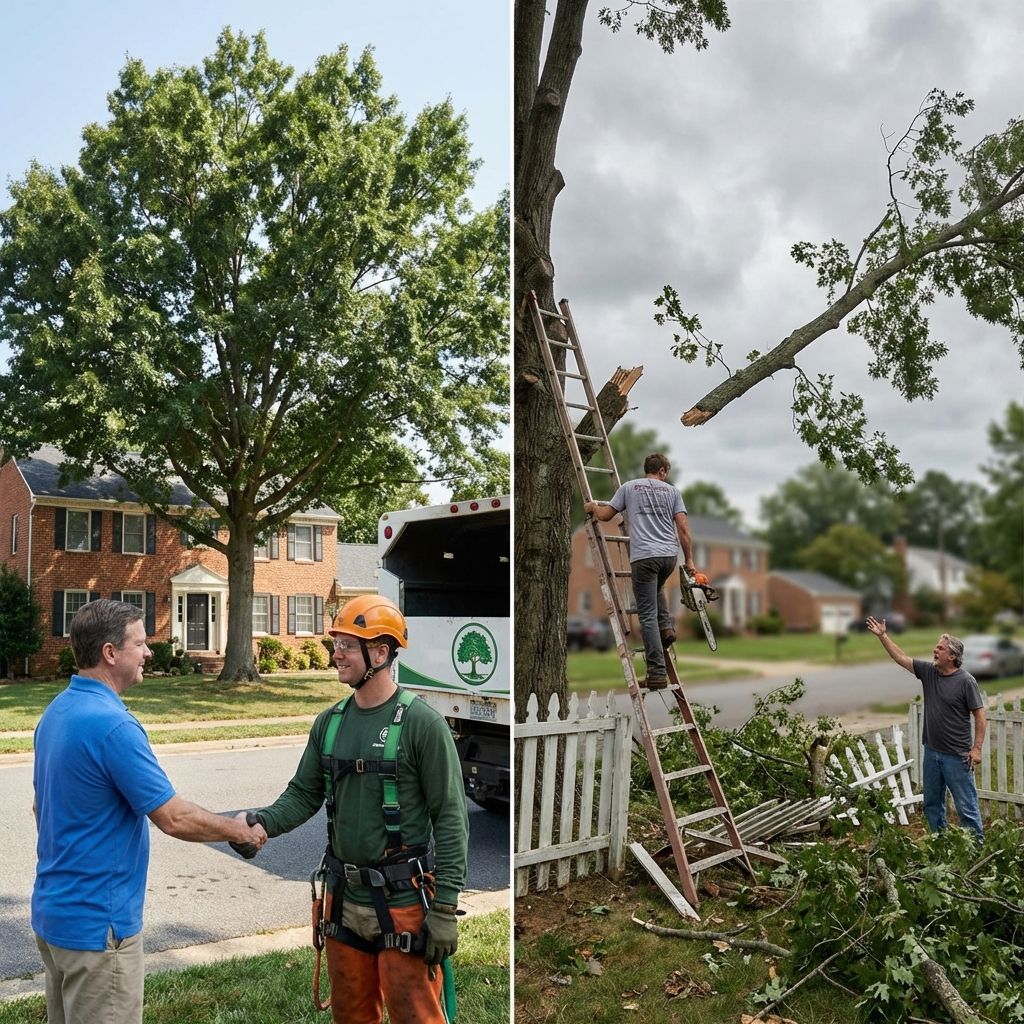
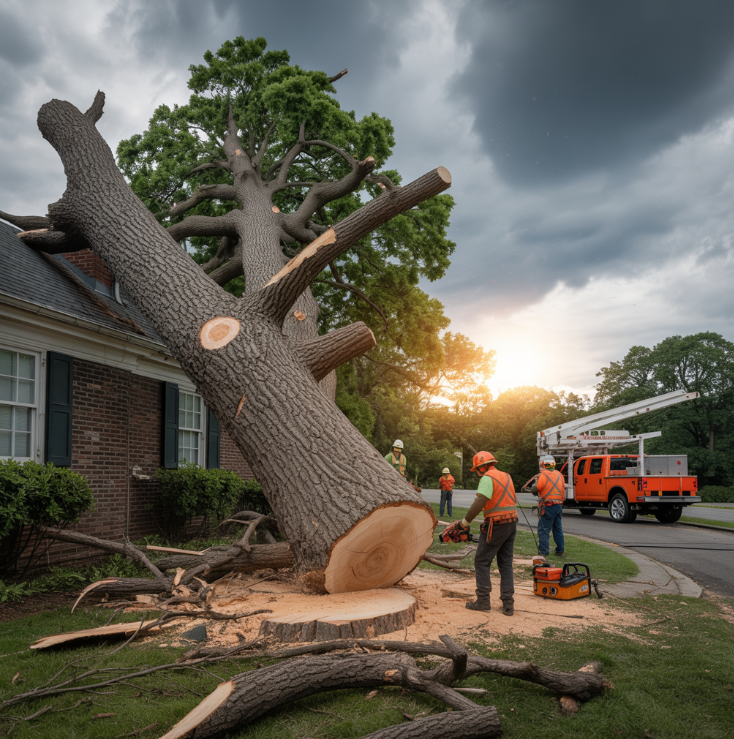
Property damage. A removed tree falls the wrong direction. A branch drops on your fence, your car, or your roof. Equipment tracks across your lawn and damages irrigation. These things happen even with experienced crews.
Worker injury. Someone falls from a tree on your property. A chainsaw causes a laceration. A limb hits a crew member.
Without proper insurance,
you may be liable for both.
Before any work begins, ask for a
Certificate of Insurance showing:
- General liability insurance — minimum $1 million per occurrence
- Workers' compensation insurance — covering every employee on your job
Call the insurance company directly to verify the policy is current. Certificates can be forged or outdated. A 60-second phone call confirms you're actually protected.
If a company says they're "covered" but can't produce a certificate on request — walk away immediately.
3. ISA Certification Matters More Than It Sounds
The
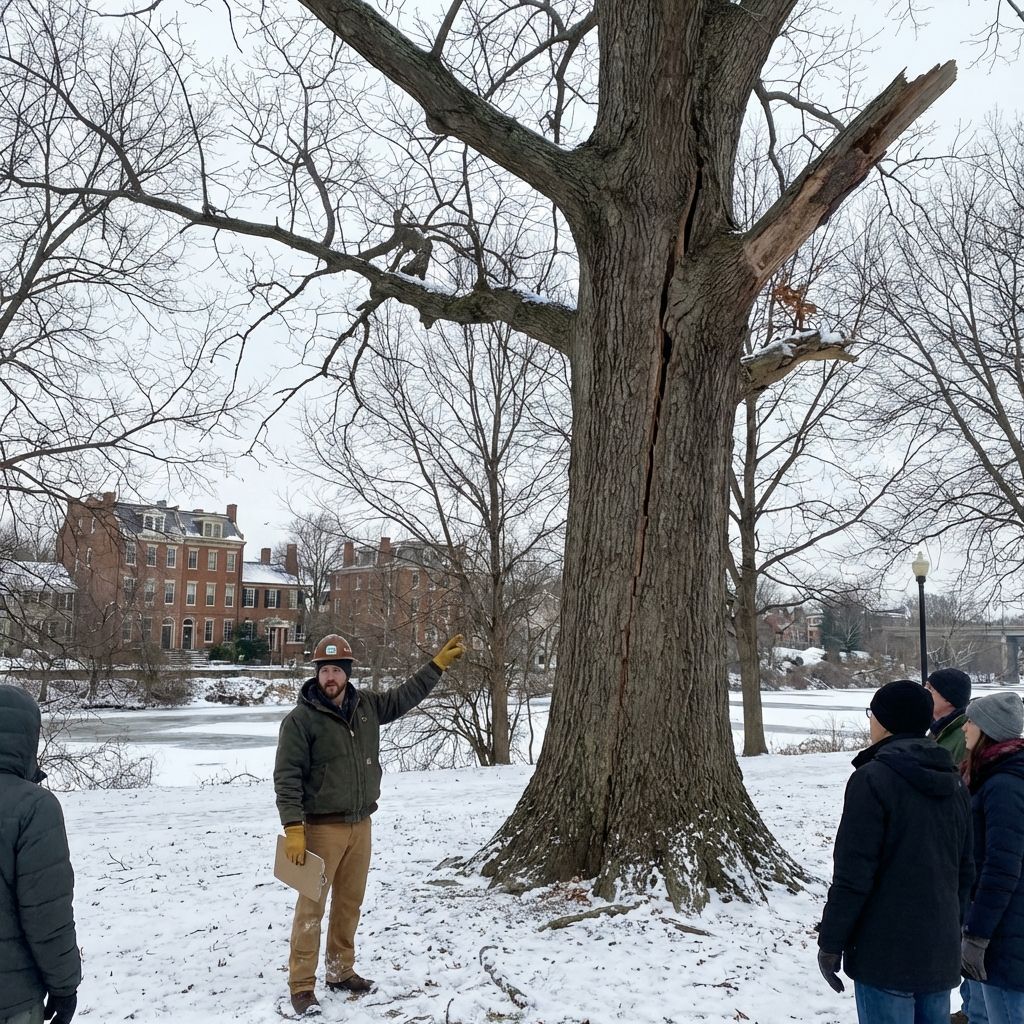
International Society of Arboriculture (ISA) certifies arborists who have passed a comprehensive exam covering tree biology, diagnosis, pruning standards, risk assessment, and safe work practices.
An
ISA Certified Arborist isn't just someone who knows how to use a chainsaw. They understand:
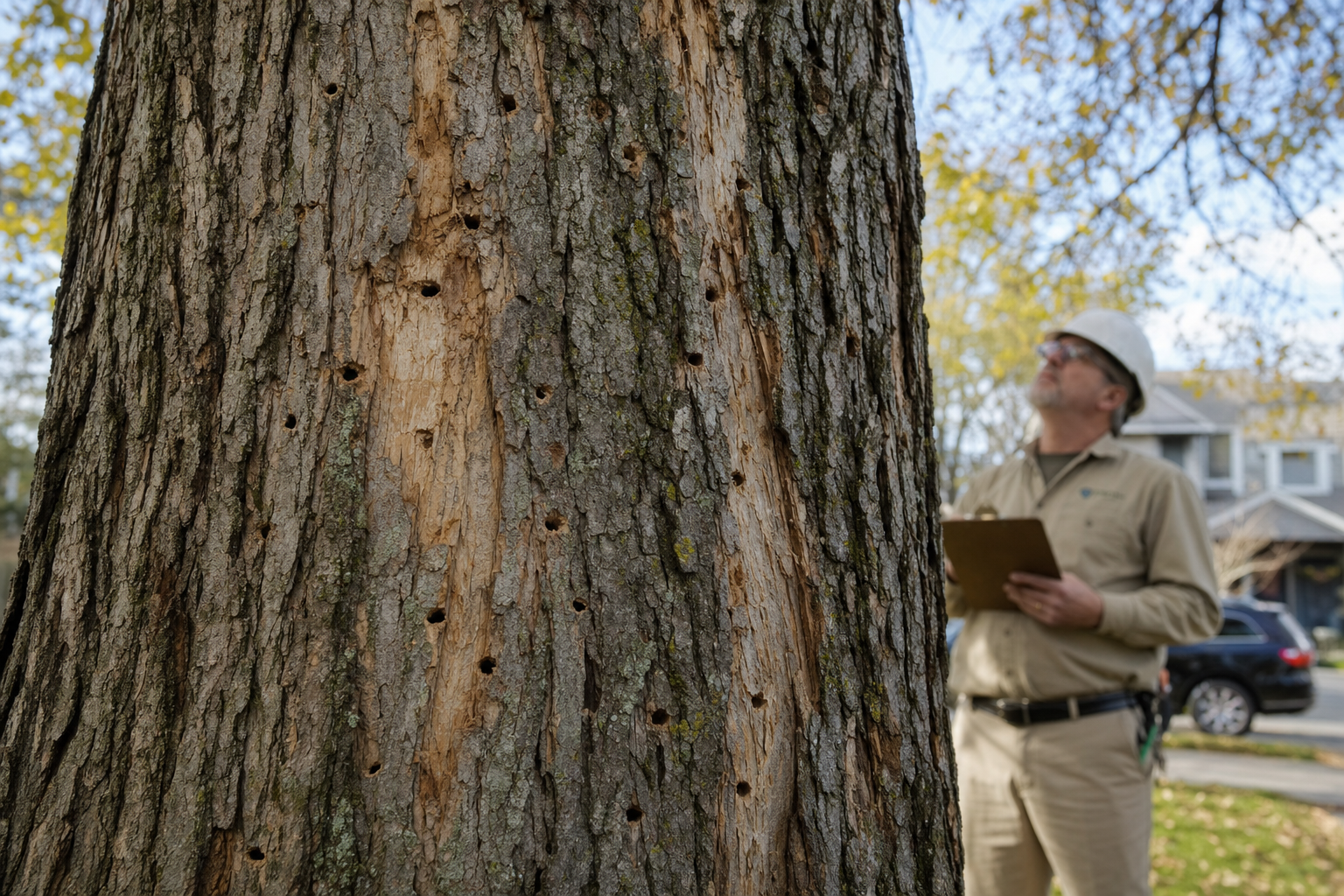
- How to assess whether a tree is structurally compromised vs. healthy
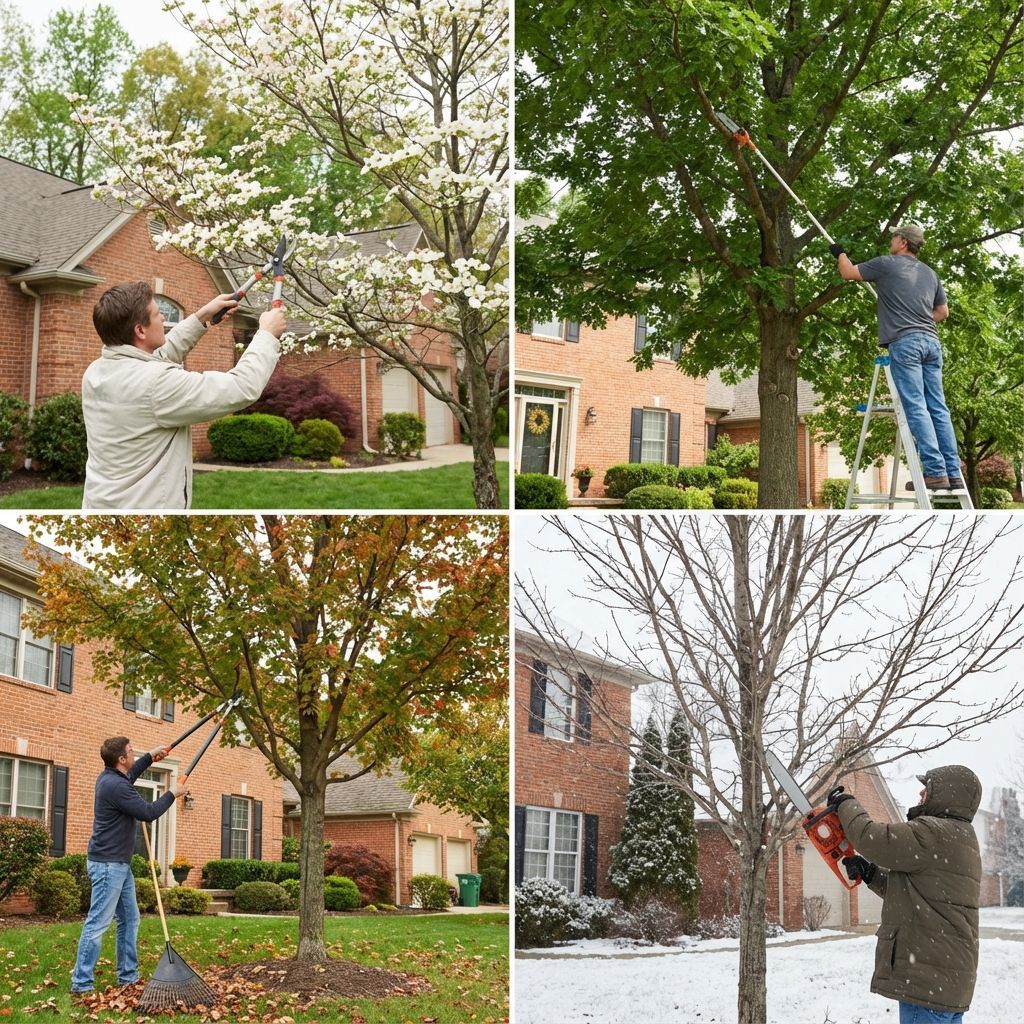
- Proper pruning cuts that promote healing vs. cuts that invite disease and decay
- Tree risk evaluation — what's actually dangerous vs. what's just unsightly
- Soil and root health, disease identification, and treatment options
In Richmond, where mature oaks, tulip poplars, sweetgums, and Virginia pines are common, proper arboricultural knowledge makes a real difference in outcomes.
Ask: "Do you have an ISA Certified Arborist on staff, and will they be involved in assessing my trees?"
A company that sends a certified arborist to evaluate your property before quoting is operating at a fundamentally different level than one that sends a crew with a price sheet.
4. Richmond's Specific Tree Hazards Require Local Knowledge
Generic tree companies that work across multiple markets often lack the regional expertise that matters in central Virginia. A company that regularly works in Richmond should be fluent in:
Virginia's storm patterns. Richmond sits in a region that gets nor'easters, tropical storm remnants, and severe summer thunderstorms. The James River corridor creates specific wind and moisture conditions. Companies that understand local storm history assess risk more accurately.
Common Richmond tree species and their failure patterns. Willow oaks — the most common street tree in Richmond — are notorious for branch failure along their horizontal scaffold branches, especially after extended wet periods. Bradford pears split catastrophically. Virginia pines are shallow-rooted and prone to uprooting in saturated soil. A company that can discuss species-specific risk is doing more than guessing.
Soil conditions in Henrico and Chesterfield. The clay-heavy soil throughout much of the Richmond metro affects root stability, drainage, and how trees respond to drought stress. This matters when assessing whether a stressed tree is recoverable or needs removal.
Ask: "What tree species do you work with most often in Richmond, and what should I know about the trees on my property?" A knowledgeable company will give you a specific, useful answer.
5. Get Three Written Quotes — and Read What They Actually Include
Tree removal pricing in Richmond varies significantly based on tree size, location, proximity to structures, and what's included in the service. A wide quote spread usually means companies aren't quoting the same scope of work.
When comparing written quotes, confirm each one specifies:
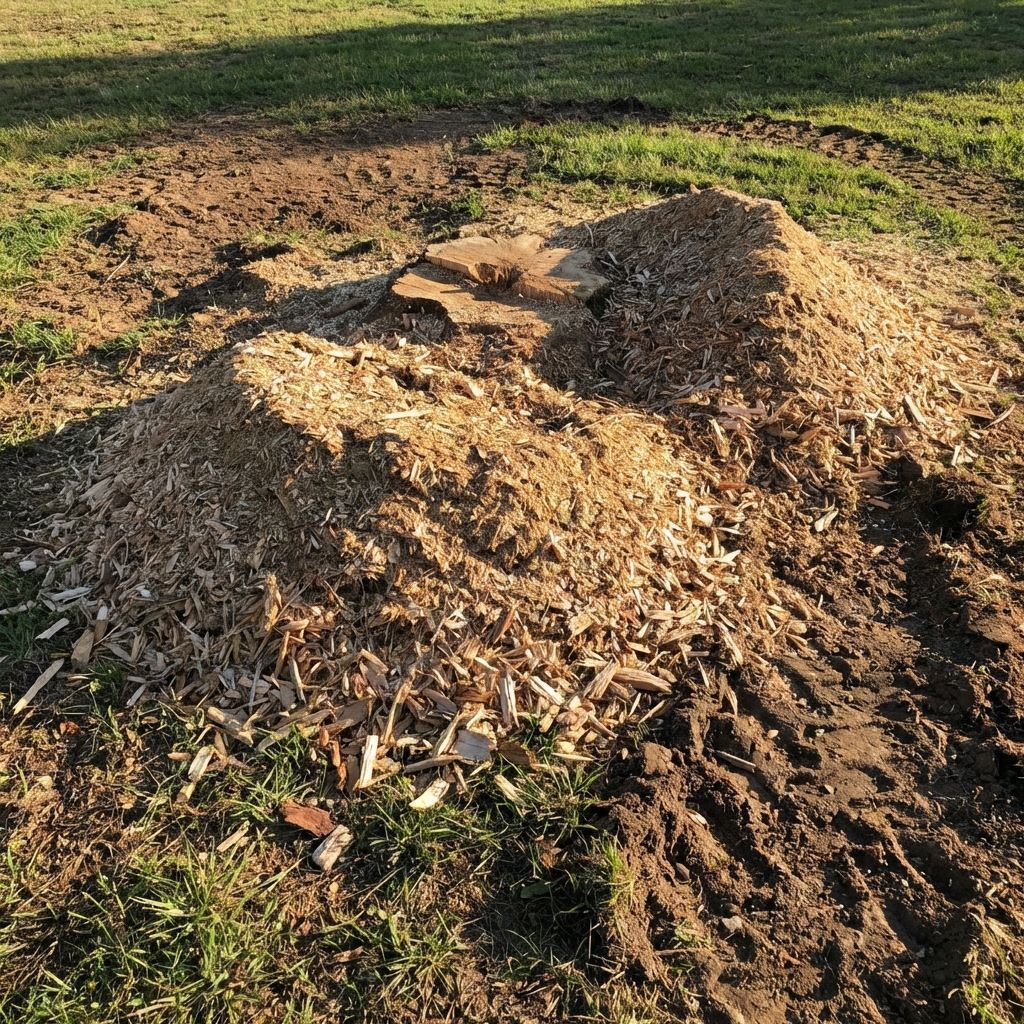
- Whether stump grinding is included or priced separately (it almost always is separate — make sure you know what you're getting)
- Complete debris removal and cleanup — some companies leave wood chips and brush unless explicitly quoted to remove them
- Number of crew members assigned to the job
- Equipment being used — crane-assisted removal for large trees near structures is safer but costs more; make sure quotes reflect actual planned approach
- Payment terms — reputable companies typically ask for partial payment at signing and the remainder upon completion, never full payment upfront
A quote that seems dramatically lower than others warrants a direct question: "What specifically is different about your approach that makes this less expensive?" The answer will tell you whether you've found a deal or a problem.
6. Watch for These Red Flags That Show Up Constantly in Richmond
Certain patterns reliably identify tree companies that will create problems:
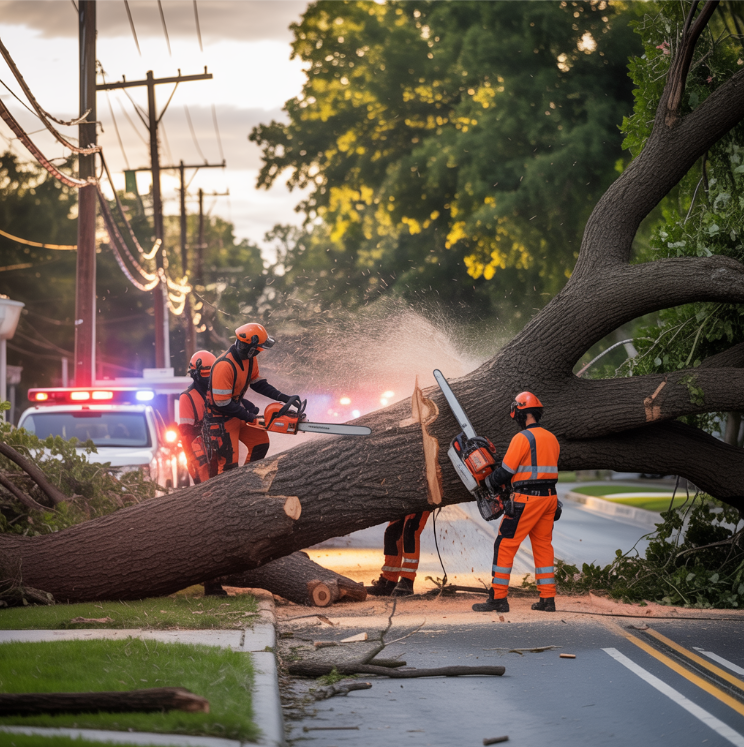
Door-to-door solicitation after storms. After hurricanes, nor'easters, or major wind events in Richmond, storm chasers flood the area offering "emergency deals." Some are legitimate; many are not. Don't hire anyone who knocked on your door uninvited after a storm without verifying their licensing and insurance first.
Pressure to decide immediately. Legitimate companies provide quotes and give you time to decide. "This price is only good today" is a manipulation tactic, not a real business constraint.
Topping trees as a standard service. "Topping" — cutting the main trunk or major scaffold branches to stubs — is considered by arboricultural professionals to be one of the most harmful practices in tree care. It creates decay entry points, weakens structure, and often kills trees over several years. Companies that recommend topping as routine maintenance are not following industry standards.
No physical address or only a personal cell number. Legitimate tree companies have verifiable business addresses and professional contact information.
Dramatic price increases after work starts. Always get scope and pricing in writing before any cutting begins. Verbal agreements aren't enforceable.
7. Check Reviews With Attention to What Went Wrong — and How They Handled It
For tree service in Richmond,
Google reviews and
Nextdoor are your best sources. Nextdoor is particularly valuable because neighbors in Henrico, Chesterfield, the Fan, Church Hill, and other Richmond neighborhoods share candid experiences about local contractors.
When reading reviews, look beyond the star rating:
- Reviews mentioning
specific neighborhoods in Richmond confirm the company actually works locally
- Feedback about
cleanup quality — did they leave a mess or leave the property better than they found it?
- Reviews mentioning
how problems were handled — a company that resolved an issue professionally often tells you more than ten perfect experiences
- Reviews mentioning
whether the estimate was accurate — surprise charges are a common complaint in tree service
A company with 150+ reviews at 4.6 stars with detailed, specific feedback is more trustworthy than one with 20 reviews at 5.0 stars that all read identically.
Why Richmond Homeowners Choose Richmond Tree Pros
At
Richmond Tree Pros, we're licensed, insured, and have been serving Richmond, Henrico, and Chesterfield with professional tree removal, trimming, stump grinding, and emergency storm response. We carry full general liability and workers' compensation insurance — certificates available on request before any work begins.
Every job starts with an honest assessment of what your trees actually need. We don't upsell unnecessary removals, and we don't recommend work that isn't in your tree's or your property's best interest. Our pricing is transparent, our quotes are written, and we clean up completely before we leave.
Whether you have a dead oak threatening your roof, storm damage that needs immediate attention, or overgrown trees you've been meaning to address for years — we're ready to help.
Call (804) 656-5766 for a free estimate. Most estimates are provided within 24 hours, with same-day availability for urgent situations.
Serving Richmond, Henrico, Chesterfield, and surrounding central Virginia communities.
Now you know exactly what to ask. The next call is easy.