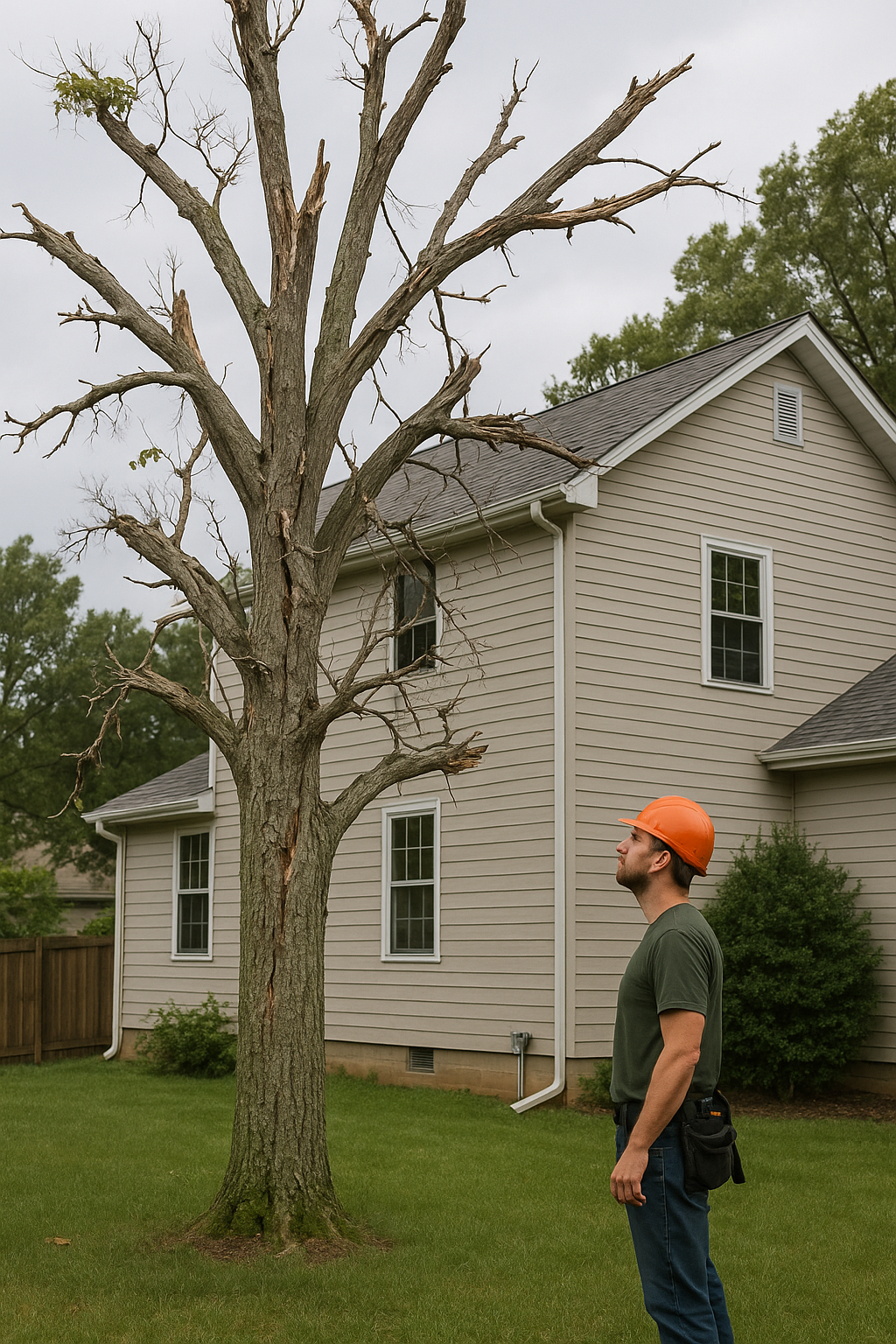
Quick answer: The emerald ash borer (EAB) is an invasive beetle confirmed in the Richmond, Virginia area that kills ash trees within 2–4 years by tunneling under the bark and cutting off water and nutrients. Warning signs include canopy thinning, D-shaped exit holes, vertical bark splits, and new shoots sprouting from the trunk. Once a tree is heavily infested, treatment is rarely cost-effective — removal before the tree becomes structurally unsound is usually the safer and more affordable path.
If you own an ash tree anywhere from
Church Hill to
Byrd Park to the Museum District, this is worth checking now — not after a dead limb comes down.
What Is the Emerald Ash Borer, and Why Is It Such a Big Deal in Virginia?
The
emerald ash borer (Agrilus planipennis) is a metallic-green beetle native to Asia that was accidentally introduced to North America in the early 2000s. It attacks only true ash trees — the
Fraxinus genus, which includes the green ash and white ash common throughout Virginia. According to the
Virginia Department of Forestry, EAB is the most destructive forest insect ever to invade the United States, having killed hundreds of millions of ash trees since it arrived. It was first detected in Virginia in Fairfax County in 2003 and, despite early eradication efforts, has since spread across the state — including confirmed presence in the greater Richmond area, according to
Richmond Tree Stewards, a local tree advocacy organization.
What Does an Emerald Ash Borer Infestation Look Like on a Richmond Tree?
Early infestation is genuinely hard to spot — that's part of what makes EAB so dangerous. According to
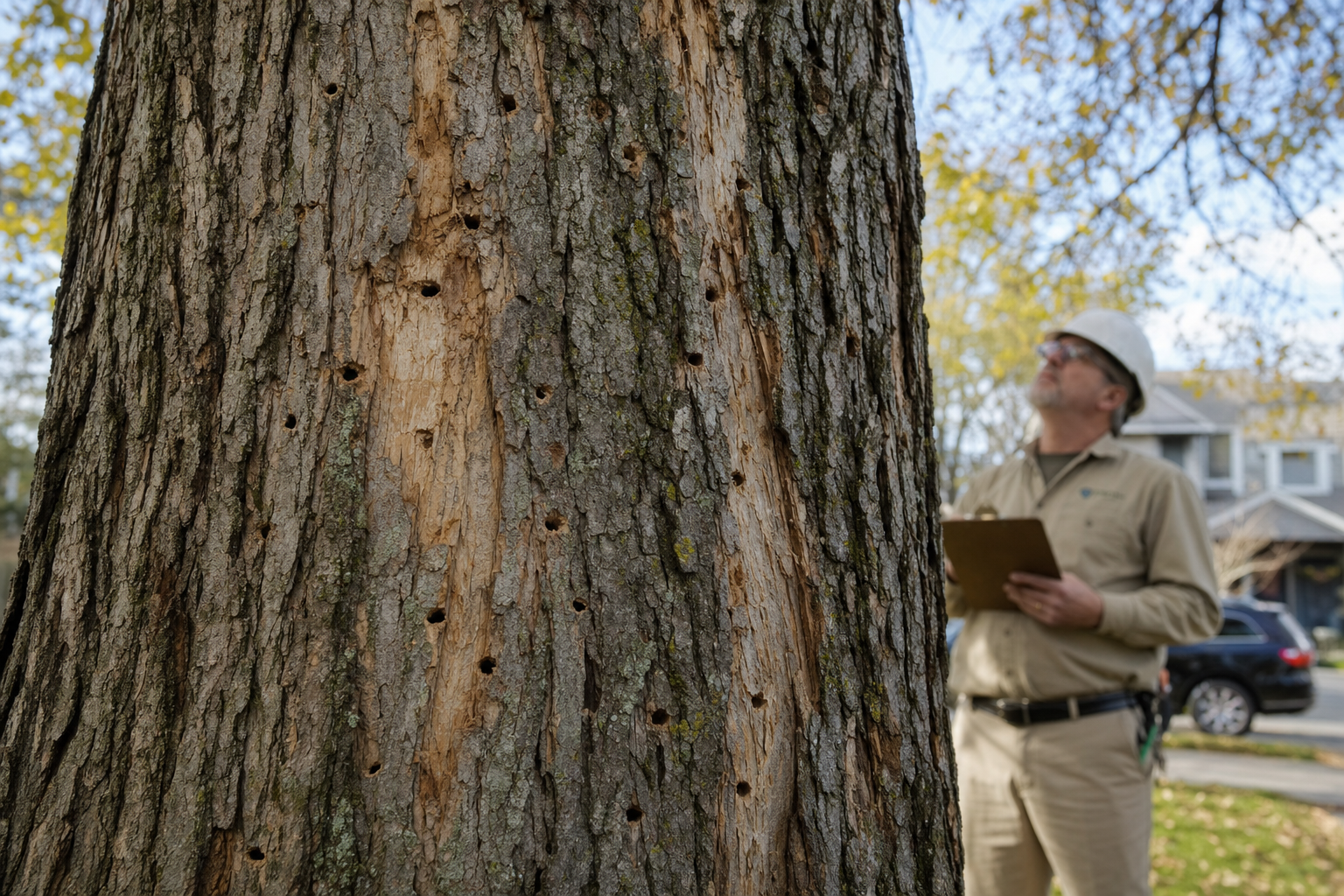
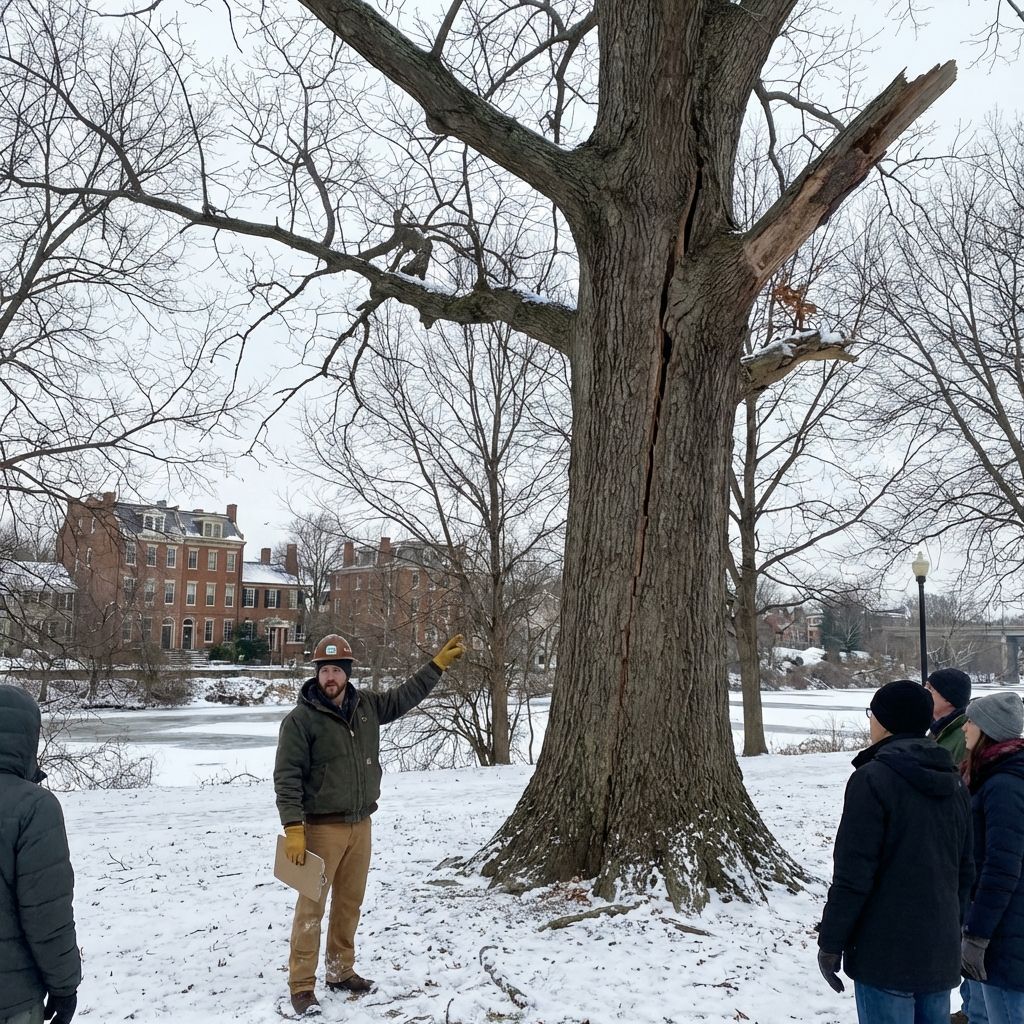
Virginia Cooperative Extension, the first visible sign is usually cracking bark high in the canopy, followed by canopy dieback as upper branches thin and die. As the infestation progresses, look for:
- Canopy thinning or yellowing, starting at the top of the tree and working down
- D-shaped exit holes in the bark, roughly 1/8 inch wide, where adult beetles emerged
- Vertical bark splits revealing S-shaped tunnels (galleries) underneath
- Epicormic shoots — clusters of new growth sprouting directly from the trunk or base, as the tree desperately tries to compensate for canopy loss
- Increased woodpecker activity, since woodpeckers feed on EAB larvae and will strip bark to reach them — sometimes called "blonding" for the lighter wood it exposes
If your ash tree shows two or more of these signs, it's time for a professional inspection rather than a wait-and-see approach.
How Fast Does Emerald Ash Borer Kill a Tree?
Once EAB larvae establish themselves under the bark, an infested ash tree typically dies within 2 to 4 years. The larvae tunnel through the cambium layer — the tissue responsible for transporting water and nutrients — and as those tunnels multiply, the tree is effectively girdled from the inside out. Because early infestation is so hard to detect, many homeowners don't realize a tree is affected until the canopy dieback is already significant, which shortens the practical window for a treatment decision considerably.
Is Emerald Ash Borer Actually Confirmed in Richmond?
Yes. EAB has spread throughout Virginia over roughly the past two decades, and the Richmond area is within its confirmed range, per both Richmond Tree Stewards and statewide monitoring from the
Virginia Department of Conservation and Recreation. Quarantine restrictions remain in place on moving ash firewood, logs, and nursery stock out of infested areas specifically to slow further spread — so if you're clearing a dead ash tree, ask your tree service about proper disposal rather than moving the wood yourself.
Should You Treat or Remove an Infested Ash Tree?
This is the real decision point, and it depends heavily on how far the infestation has progressed. Preventive and early-stage treatment — typically trunk injection with a systemic insecticide — can protect a healthy or lightly infested ash tree for one to two years per application, but it has to be repeated indefinitely; a lapse in treatment leaves the tree vulnerable again. The Virginia Department of Forestry even runs an
Emerald Ash Borer Treatment Cost-Share Program to help offset this for eligible trees. But once canopy loss passes roughly 30–50%, most arborists — us included — will tell you treatment cost stops making financial sense compared to the value of the tree, and removal becomes the more responsible option, both financially and for safety.
Why a Dead Ash Tree Is a Serious Hazard Near Richmond Homes and Power Lines
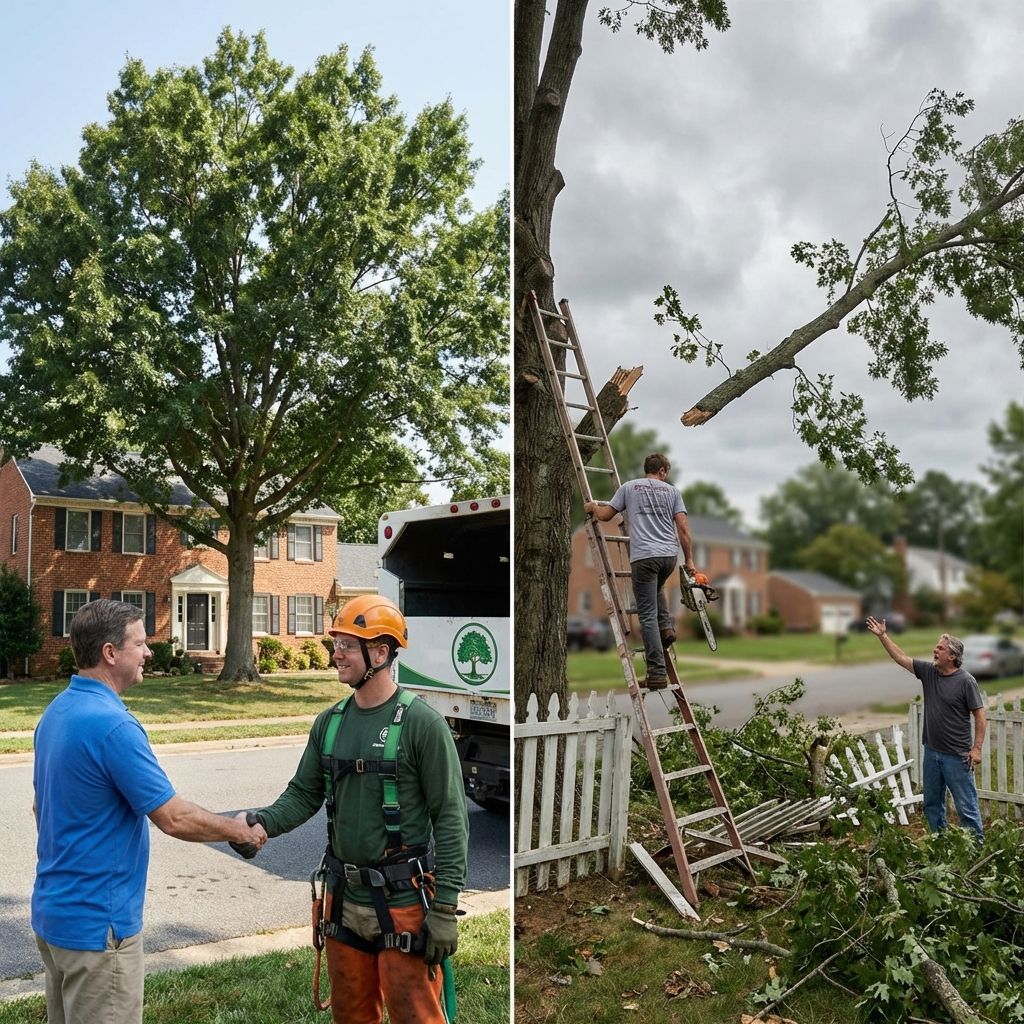
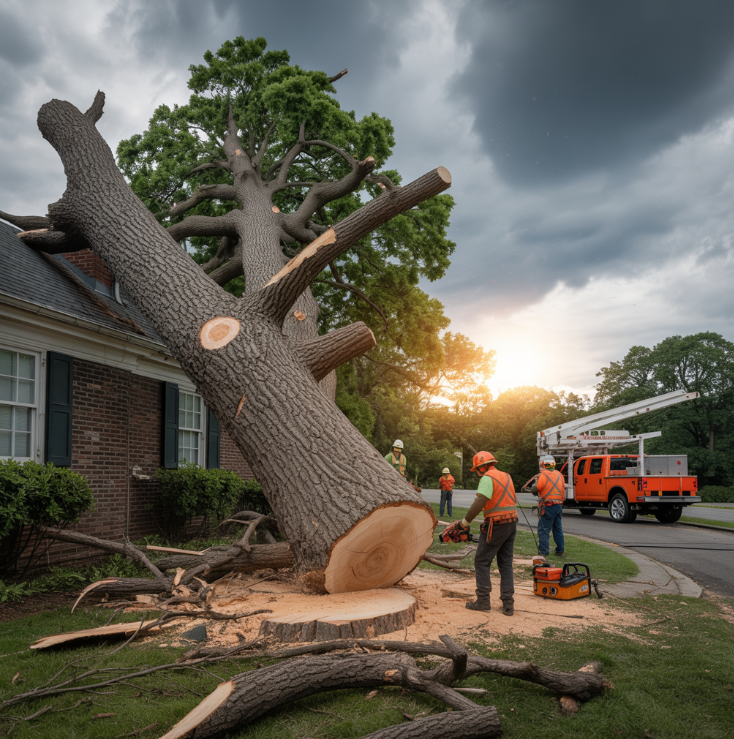
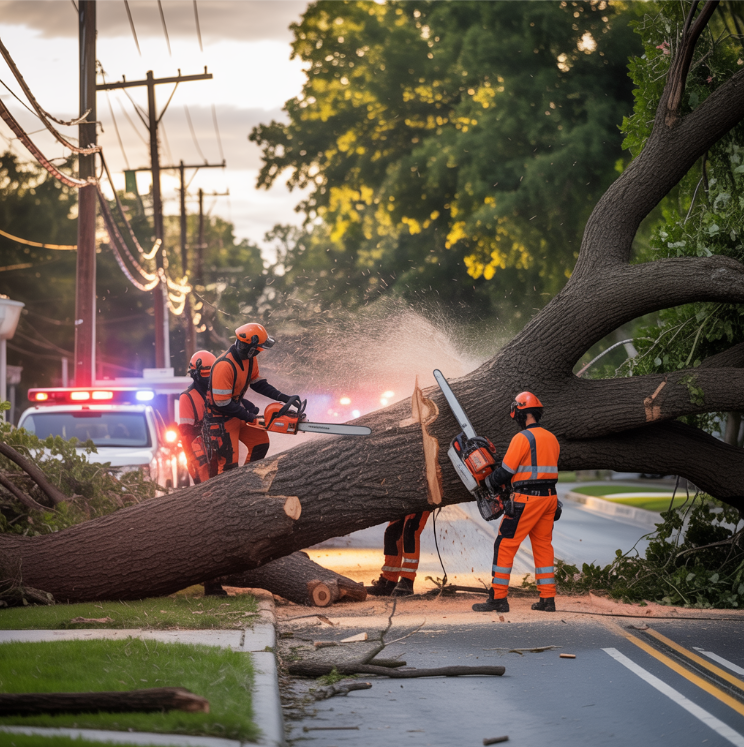
This is where EAB stops being a landscaping issue and becomes a safety issue. Ash wood becomes brittle remarkably fast once a tree dies from EAB, and dead ash trees are known for dropping large limbs with little warning — a real risk for anything underneath, including roofs, driveways, and power lines. Since
Dominion Energy, headquartered right here in Richmond, maintains extensive overhead distribution lines throughout the city and surrounding counties, a dead ash tree near a service drop isn't a "get to it eventually" project — it's the kind of thing that turns into an
emergency tree removal call during the next storm if it isn't addressed proactively. If you're unsure whether a tree on your property is already a hazard beyond just EAB, our guide on
identifying dangerous trees in winter covers the broader warning signs worth knowing.
What Should Richmond Homeowners Do If They Suspect EAB?
If you're in an older, tree-canopied neighborhood — Byrd Park, the Fan District, Church Hill, the Museum District, Forest Hill, or similar areas along the
James River corridor — mature ash trees are common enough that this is worth checking proactively, not just after you notice a problem. Start with a professional inspection to confirm whether you're dealing with EAB specifically or another issue entirely, since several other pests and diseases can produce similar symptoms. From there:
- Confirm the diagnosis. Don't assume — a certified arborist can identify EAB-specific signs versus other causes of canopy stress.
- Assess canopy loss. This determines whether treatment is still realistic or removal is the better call.
- Get a written removal quote if needed. Our
Richmond tree removal cost guide breaks down what drives pricing so you know what to expect.
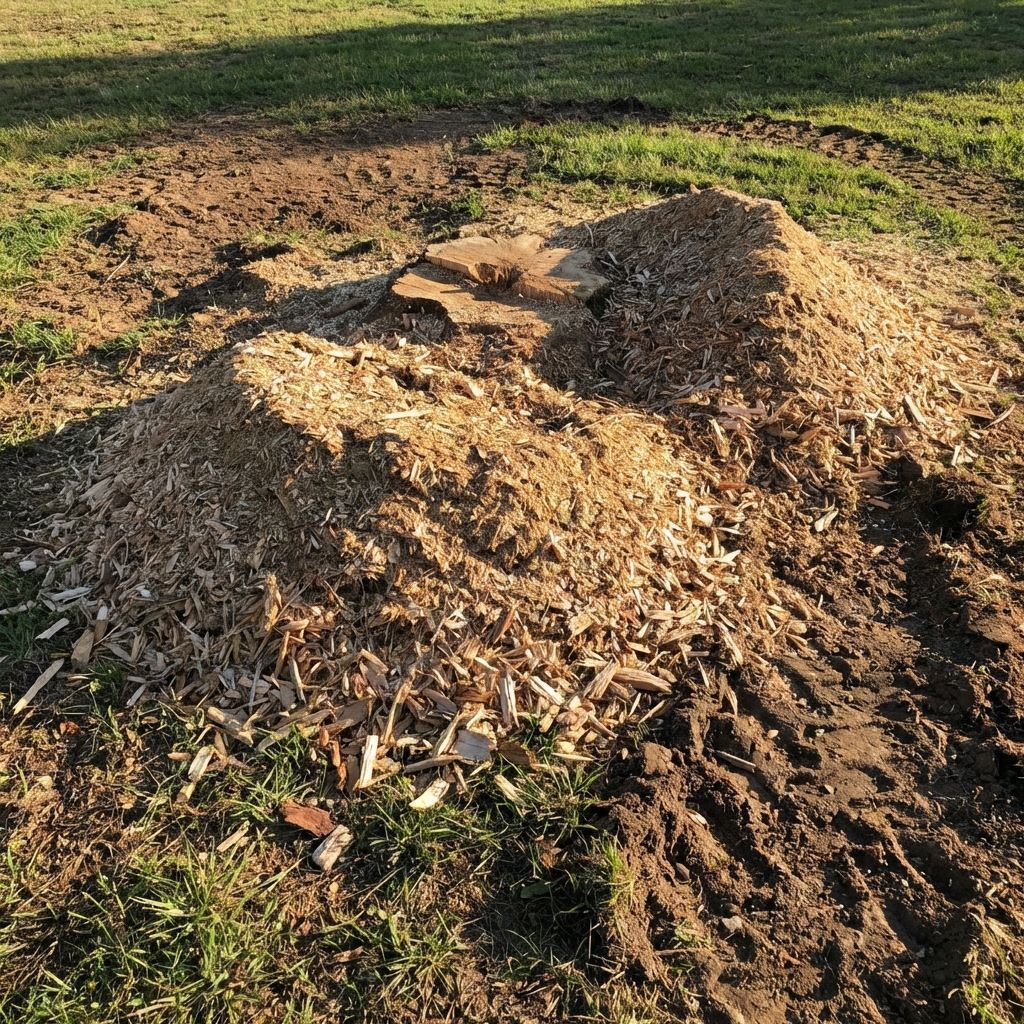
- Ask about stump handling. A dead ash stump left behind can attract other pests — see our
stump grinding guide for why that matters.
- Verify who you're hiring. Not every company advertising tree service locally is properly licensed and insured — our guide on
choosing a tree service company in Richmond covers what to check first.
FAQ
How do I know if my tree is an ash tree?
Ash trees have compound leaves with 5-9 leaflets arranged opposite each other on the stem, diamond-patterned bark on mature trees, and distinctive paddle-shaped seed clusters. If you're not sure, a photo sent to a local arborist is the fastest way to confirm.
Can an emerald ash borer infestation be cured?
No — there's no cure once a tree is infested, only ongoing suppression through repeated insecticide treatment. Treatment works best on healthy or lightly infested trees and must continue indefinitely to remain effective.
How much does it cost to remove a dead ash tree in Richmond?
Cost depends on the tree's size, condition, and proximity to structures or power lines. Dead or heavily compromised trees can sometimes cost more to remove than a healthy tree of the same size, since brittle wood requires more careful technique.
Will emerald ash borer spread to my other trees?
EAB only attacks true ash trees (Fraxinus species) — it won't spread to oaks, maples, or most other common Richmond landscape trees. However, if you have multiple ash trees on or near your property, all of them are at similar risk.
Is it illegal to move ash firewood in Virginia?
Quarantine restrictions apply in EAB-affected areas of Virginia specifically to prevent moving the beetle to new locations through firewood, logs, and nursery stock. Ask your tree service how they handle disposal of removed ash wood.
How urgent is removing a dead ash tree near my house?
Very. Dead ash wood becomes brittle quickly and is known for dropping large limbs without warning, which is a serious risk to structures, vehicles, and power lines. This isn't a project to defer to next season.
Worried You Might Have an Infested Ash Tree? Don't Wait for a Dead Limb to Make the Decision for You.
Richmond Tree Pros offers free on-site inspections for Richmond, Henrico, and Chesterfield homeowners — we'll tell you honestly whether treatment is still viable or removal is the safer call, with no pressure either way. Same-day availability for hazardous trees.
Call (804) 656-5766 or request your free estimate online today.